


Every parent who has ever handed a child a device had the same quiet hope.
“They will use it for something good.”
And in those first few weeks, it feels true. The child is curious. They explore. They ask questions. They seem engaged with something meaningful.
Then, gradually, almost invisibly, something shifts.
The curiosity narrows. The exploration stops. The same platforms appear every session. The same content loops. The device stops being a window to the world and becomes a very comfortable, very familiar, tiny room.
Digital freedom, the idea that children given open access to technology will naturally discover its best uses, is one of the most well-intentioned and consistently disappointing ideas in modern parenting.
Freedom without guidance does not produce explorers. It produces habit. And the habits that the open internet forms in children left to navigate it alone are almost never the habits parents hoped for.
1. What Digital Freedom Actually Looks Like for Most Indian Children?
The conversation about children and technology in India almost always frames freedom as the goal.
More access. More devices. More connectivity. Remove the barriers and let children discover.
But freedom without structure is not opportunity; it is overwhelm. And the internet, for all its extraordinary potential, is not designed to guide children toward their best uses of it. It is designed to hold their attention. These are fundamentally different objectives.
According to research by the Internet Watch Foundation, children with unrestricted internet access encounter inappropriate content within their first month of unsupervised use in the majority of cases, not through deliberate searching, but through algorithmic recommendation and accidental exposure.
Digital freedom without digital guidance fails to shield children from the internet’s most dangerous areas. It simply removes the adult presence that would have helped them navigate away.
The children who thrive digitally are not the freest ones. They are the most guided ones, children who have been shown how to use technology with purpose, given environments that support that purpose, and trusted to grow within that structure over time.
2. Why Children Need Direction Online Before They Need More Access?
Here is the distinction that changes everything for Indian parents.
Access gives a child the internet. Guidance gives a child a relationship with the internet, one built on purpose, clarity, and healthy habits that serve them for life.
A child with access but no guidance opens a device and follows whatever pulls their attention first. That pull is usually toward a less enriching option. It is toward the most immediately rewarding one, which, by design, is entertainment, not education.
A child with guidance opens a device, knowing what they are there to do, in an environment that supports that purpose, and closes the session having built something real.
The Child Mind Institute’s research on children and screen habits shows clearly that children who receive consistent digital guidance from parents develop stronger self-regulation around technology, healthier attention spans, and significantly more purposeful online behavior than children given unrestricted access without parental involvement.
Guidance is not restriction. Restriction removes the option. Guidance shapes how the option is used, and that shaping is where real digital parenting happens.
3. How to Build Healthy Digital Habits Before Screens Become the Problem?
Healthy digital habits are not built in response to a problem. They are built before the problem arrives through consistent, intentional environment design that makes purposeful use the natural default.
Four practical approaches that work for Indian families:
Start with purpose, not permission. Before every digital session, ask your child one question: “What are you going to do today?” Not how long, but what. This pre-session intention takes 30 seconds and shifts the entire energy of the session from passive drifting to active purpose.
Separate learning environments from entertainment environments. Even on the same device, create distinct contexts, a different browser profile, a different login, and a different set of bookmarks for studying versus free time. The brain responds to environmental cues. Different contexts produce different behaviors.
Make progress visible and celebrated. Children who can see their own digital learning data, days studied, skills practiced, and consistency built develop a relationship with their own growth. They begin protecting their streak, tracking their progress, and feeling proud of their consistency without needing external pressure.
Talk about what they built, not what they watched. Replace “what did you watch today?” with “what did you make or learn today?” This single conversational shift moves digital time from consumption to creation and tells you far more about whether the device is building your child or simply occupying them.
4. How Responsible Internet Use Grows From the Right Digital Environment
Responsible internet use is not a value you can teach through a conversation once.
It is a behavior that emerges, gradually, consistently, over time, from an environment that makes responsible choices the easiest, most natural ones available.
Children who grow up in structured digital environments do not just avoid harmful content; they develop an internal compass about how to use technology purposefully. They learn that screens are tools, not companions. Focused sessions produce more satisfaction than endless scrolling. That what they build online matters more than what they consume.
This is digital citizenship, and it has grown in environments, not classrooms.
5. How Apni Prerna Gives Children Digital Direction Without Taking Away Their Confidence
Apni Prerna is student safety software built specifically for Indian children, and it delivers digital guidance through environment design, not restriction alone.
Every feature of Apni Prerna is built around one central belief: children do not need less technology; they need better-designed technology environments.
Here is what guided digital learning looks like inside Apni Prerna:
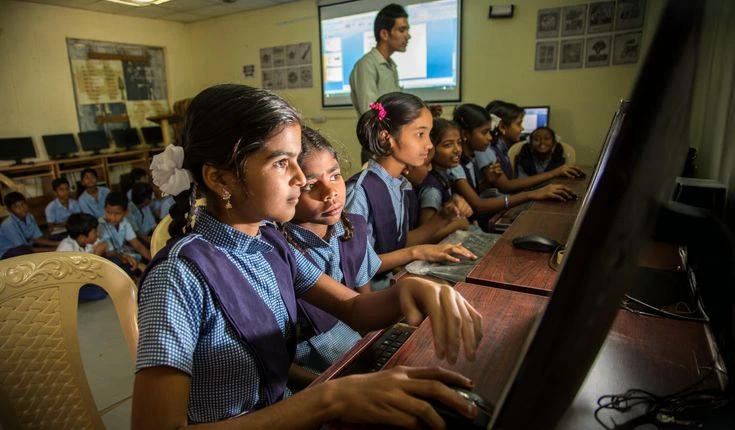
Personal student login creates ownership from the first moment. Your child logs in with their own unique roll number, not as an anonymous user but as a learner with a record and a path forward. That identity shapes every decision they make during the session.
Harmful and distracting content is structurally unavailable. Adult content, gaming platforms, social media, and entertainment sites are blocked at the system level before they load. Your child does not fight temptation. The environment removes it, quietly, consistently, without conflict.
Learning is the easiest path available. Educational platforms, AI learning tools, coding resources, and approved learning content are fully accessible and load instantly. When the only smooth path leads to learning, children follow it naturally and build genuine skill in the process.
Real progress is visible to children and parents alike. Every session generates honest learning data, focused study time, platforms used, and consistency week over week. Children track their growth on a personal dashboard. Parents receive clear session reports. Responsible digital behavior becomes visible, and visibility makes it sustainable.
Mentors and school leaders support every student through a central overview. NGO-run PODs, school computer labs, and community learning centres use Apni Prerna’s admin dashboard to ensure no student’s digital learning journey becomes invisible or unsupported.
A parent from a learning community in Nagaland shared what changed for her son:
Before, they handed him the phone hoping he was doing something useful. Now, he tells them what he learned today, without being asked. That change feels small. It is enormous.
Conclusion
Digital freedom is not the gift Indian children need most right now.
Digital guidance is.
Not because children cannot be trusted, but because the internet was not built to be trustworthy to them. It was built to hold their attention. And attention held without direction produces habit, not growth.
The parents who give their children the most valuable digital start are not the ones who gave the most freedom. They are the ones who built the most purposeful environment, where guidance was built in, structure was consistent, and responsible digital behavior became the natural outcome of every session.
Apni Prerna is that environment. And in it, children do not just use technology responsibly; they grow through it, confidently, consistently, and with real skill to show for every hour they invest.
Is your child online every day but growing in the wrong direction? Apni Prerna gives Indian children the digital guidance they need, built directly into the learning environment, working quietly every session.
See How Apni Prerna Works: Student Safety Software for Indian Families
Explore Apni Prerna and build healthier digital learning habits for your child. Click Here to See How It Works.