
Introduction
Two things have always changed the world: Invention and Innovation.
When the telephone was invented in 1876, its only job was to connect two people. Over time, the telephone became a phone, and the phone became a smartphone, a device that now does far more than just calling.
When we say something is smart, we usually mean intelligent or fast. But in reality, the smartest things are those that adapt to changing needs and do more than one job to make life easier.
That’s why:
- TV became a Smart TV
- Watches became Smart Watches
- Blackboard became Smart Boards
All these tools were originally made for a single purpose, but they evolved to meet new learning and usage needs. For example, a blackboard was only meant for writing, but smart boards understand that students need visuals, videos, and interaction to learn better.
If devices are becoming smart, users must also become smart. And traditional schools, using old tools and rigid methods, cannot fully prepare students for today’s world.
That’s where the idea of a Smart School begins.
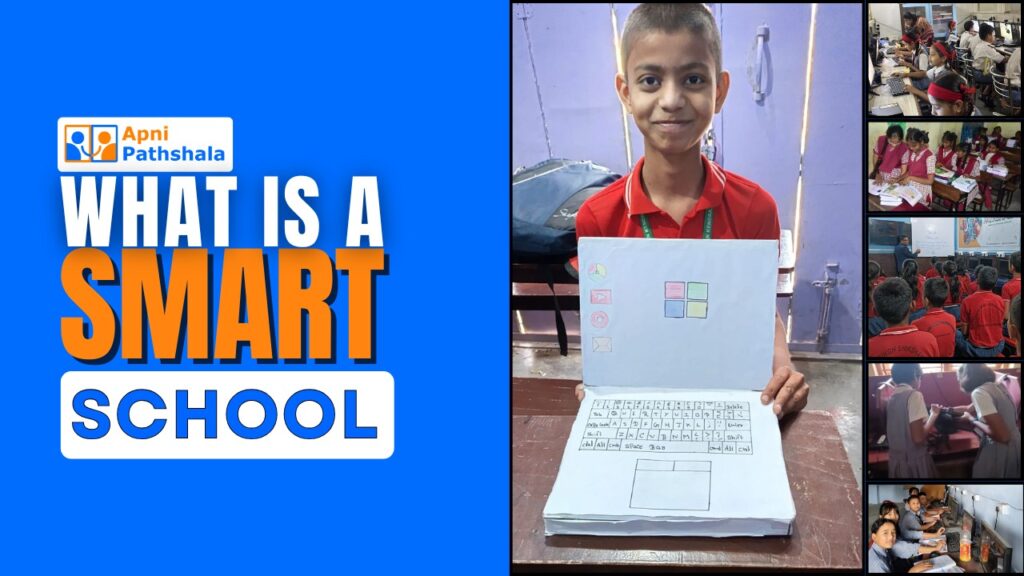
What is a Smart School?
A smart school is a school that educates children while adapting to modern needs and technology. It prepares students to become adaptive learners who can handle future advancements.
A smart school integrates digital technology, AI, modern tools, and a modern mindset. The goal is not just education, but preparing students to be self-learners and grow in a changing world.
What Makes a School “Smart”?

The most important task of any school is to help students build a better life. But a smart school goes one step further: it prepares students to be tech-ready and adaptable learners.
- Mindset:
Traditional schools focus mainly on exam marks. A smart school focuses on real learning and preparing children to adapt to any situation. - Teachers:
Teachers are always the core of education. In a smart school, teachers help students learn beyond textbooks and encourage curiosity, exploration, and independent learning. - Technology / Tools:
Using blackboards and books is important, but computers can transform learning. Smart boards, projectors, and educational computers like Apna PC help students visualise concepts and understand better. This is why Apni Pathshala supports schools with computers and digital tools. - Adaptive Curriculum:
Curriculum should adapt to students, not the other way around. A combination of traditional subjects and modern digital learning works best. Sudden changes can create insecurity, but guided change builds confidence. - Parents’ Role:
A smart school also prepares parents for digital learning and better parenting in today’s world.
(Read our blog on Parenting Challenges in the Digital Age.)
How Do Smart Schools Work?

1. Smart Classrooms:
Traditional classrooms focus only on textbooks and grades. Smart classrooms blend technology with learning and focus on how well students actually understand concepts.
2. Measured by Outcomes, Not Just Marks:
For years, exams were considered the only measure of success. But exams mainly test memory, not understanding. Smart schools use projects, practical work, presentations, and exams together. Students are guided through feedback instead of being judged only by marks.
3. Parent Involvement:
Traditional systems push parents into a results race. Smart schools help parents understand children better through sessions and PTMs, especially in a fast-changing digital world.
4. Focus on SEL (Social Emotional Learning):
The education system often turns students into emotionless machines. Smart schools focus on social and emotional learning, helping children understand their emotions, confidence, and learning journey.
5. Smart Guidance:
Traditional schools often push students toward fixed career paths. Smart schools guide students to explore interests and choose what they truly want to become.
6. Self-Learners:
Instead of creating dependency on teachers, smart schools teach students how to learn on their own. Students are taught how to research, understand topics, and explore knowledge independently.
7. Smart Homework:
Smart schools avoid repetitive homework. Instead, students explain what they learned or prepare for upcoming topics. This makes classroom learning easier and more effective.
8. Safe Digital Exploration :
Self-learning is powerful, but it also comes with online risks. That’s why smart schools prepare students and parents for digital safety. At Apni Pathshala, we’ve built Apni Prerna into every Apna PC, so children can explore the internet safely, and parents and teachers can trust the learning journey.
9. Using the Microschooling Concept:
Teaching too many students at once reduces learning quality. Smart schools maintain a healthy teacher-student ratio and adopt microschooling concepts for personalised learning.
Microschool Impact on Smart Schools
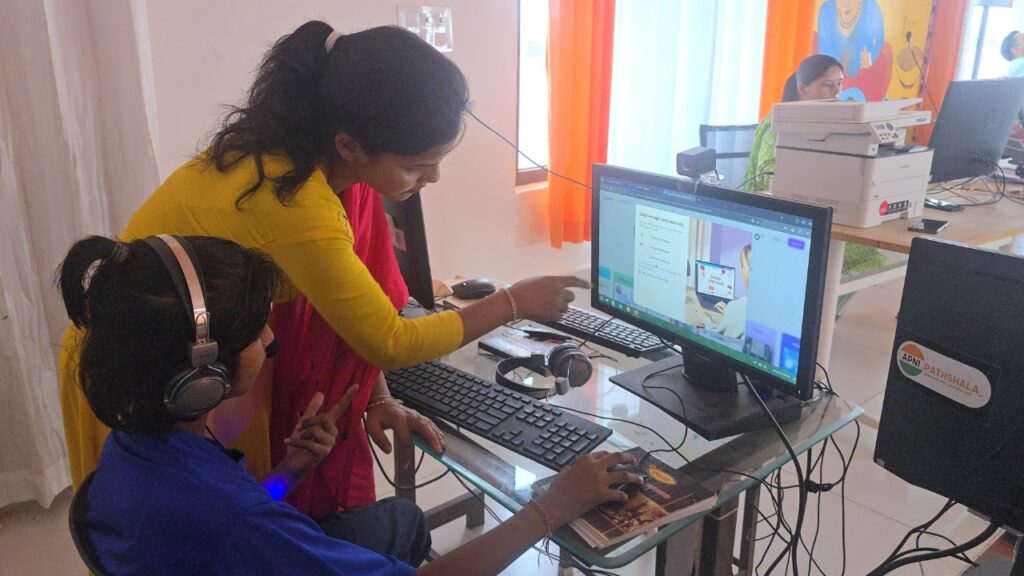
A microschool is a small community classroom equipped with the tools children need to learn. It maintains a healthy student-teacher ratio (around 15:1) and focuses on personalised learning, real-world skills, self-learning, and peer learning.
Apni Pathshala is building a digital classroom community called Learning PODs. We also collaborate with government and private schools for our shared goals. As schools adopt the microschool approach through Learning PODs, they naturally evolve into smart schools. Our community plays a key role in this change.
Conclusion
Now you understand:
- What a smart school is
- What makes a school smart
- How smart schools actually work
A smart school is built not just by technology, but by mindset, teachers, parents, and community support.
Educational computers like Apna PC can transform learning, but only when schools are ready to change how they teach.
The smart school concept is not an idea on paper.
It is a process, and it works best when communities, schools, teachers, parents, and students work together.
If you are a leader who wants to impact your community, you can partner with Apni Pathshala through Start a POD.
To learn more:
- Read about Microschooling Impact
- Explore our Success Stories
- Check out our Top 10 Non-Profit PODs
For more information about our educational computers, visit the Apna PC page.
Smart schools don’t happen by chance.
They happen when learning itself becomes smart.