

INTRODUCTION
Every week, many people ask us the same question:
“Does Apni Pathshala give free computers to communities?”
It sounds like a simple yes-or-no question, but the real story has much more heart, much more purpose, and much more student impact behind it.
Most people think giving free computers is the easiest way to reduce the digital divide.
But when you look deeper, you realise that free does not always help learning grow.
So here is the truth, explained simply:
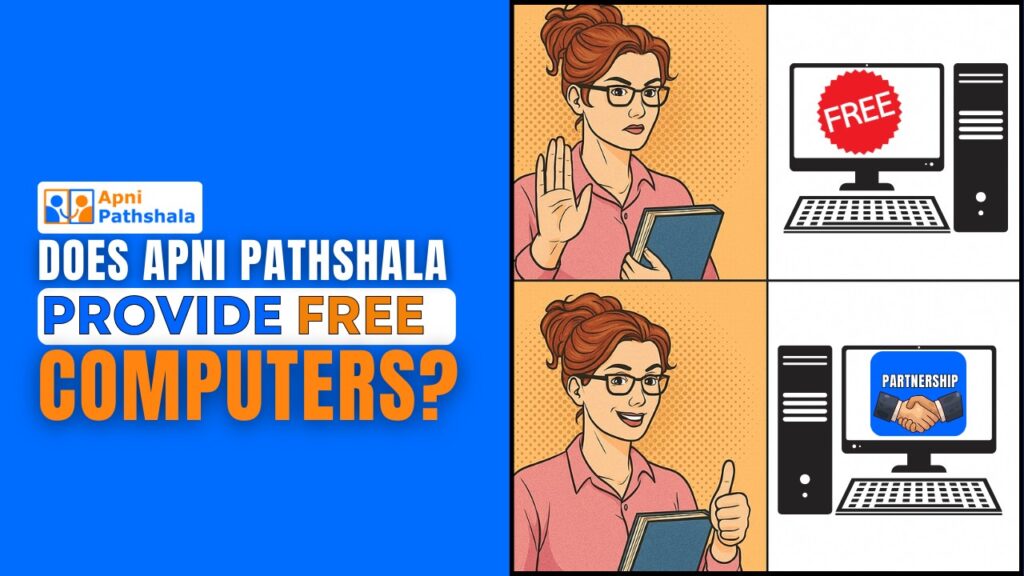
No, Apni Pathshala does not give free computers to anyone.
But we also never charge even a single rupee.
Instead, we ask for something far more valuable for a child’s learning journey:
Partnership and cooperation.
This has become our core idea:
Your cooperation is your payment.
This blog will explain everything step-by-step so you understand how Apni Pathshala works, why we follow this model, and how your community might also receive computers through our POD network.
Let’s begin with the most basic question:
What exactly is Apni Pathshala?
What Is Apni Pathshala?

Apni Pathshala is a nonprofit startup building a nationwide network of small community microschools called Learning PODs. These PODs are digital learning spaces filled with computers, guidance, and child-friendly tools that help students explore and learn at their own pace.
We work with community leaders, NGOs, and schools to open these PODs across India, from Jammu & Kashmir to Tamil Nadu, and from Gujarat to Nagaland.
By partnering with local leaders and organisations, we aim to open 10,000+ PODs across the country. Our goal is to make sure every child can use a computer, learn from it, and build a better future for themselves, no matter where they live.
Computers are one of the core pillars of Apni Pathshala.
But the way we provide them is very different from the idea of “free distribution.”
Do we give free computers?

Let’s answer it clearly.
No, we do not “give” free computers.
We provide computers on a no-cost lease to communities through our POD model.
That means:
- The POD receives computers to use for their students
- They do not pay any money or fee to us
- The computers remain under a lease agreement (usually 15 months, and can be extended)
- The POD agrees to follow certain responsibilities and partnership commitments
We usually provide 10 powerful educational computers called Apna PC to each learning centre. At that point, the centre officially becomes an Apni Pathshala POD.
Partnership and cooperation are the only “payment” we need.
Why? Because we learned this the hard way.
Why We Stopped Giving Completely Free Computers
In our early days, we tried something that many people expect:
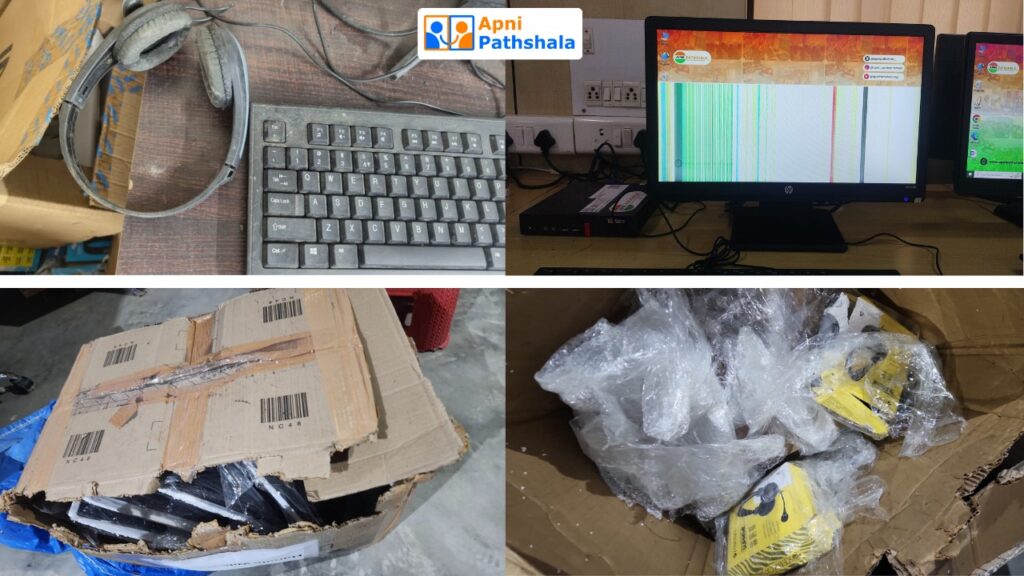
We gave computers for free to organisations.
On paper, it sounded perfect.
In reality, the results were… disappointing.
When we analysed what was happening, we noticed:
- Some computers were never used
- Some were kept in boxes for months
- Some were broken within 2 months and never reported
- Some organisations said they didn’t have the resources to manage them
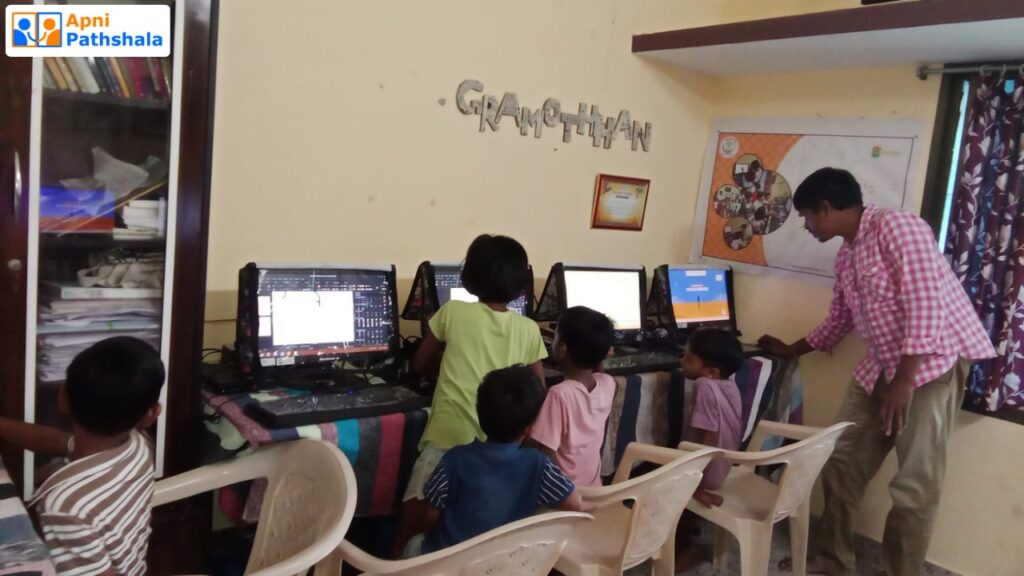
- In many cases, the children did not get real, regular access
Because the computers were “free”, there was no ownership, no responsibility, and almost no impact.
That’s when we realised something important:
“Free” can be very expensive for children’s futures.
We call this the cost of free.
So we changed our model completely.
What Partnership With Apni Pathshala Really Means
After learning from our mistakes, we built a new system
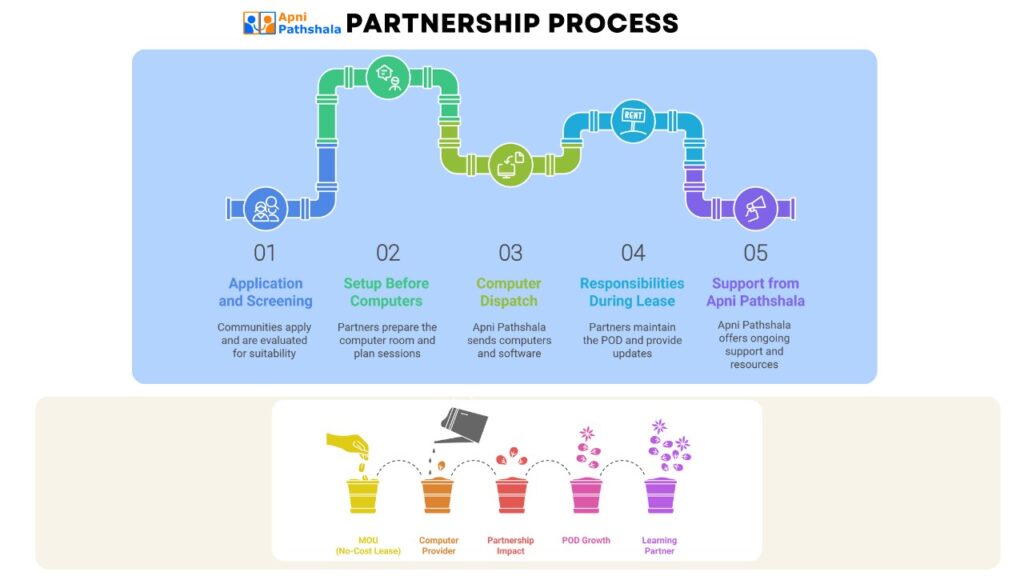
a self-working funnel that allows us to trust the right partners.
Here’s how it works now, in simple steps:
1. Application and Screening
- Communities, NGOs, or schools apply to Start a POD
- Our team studies their need, capacity, and dedication
- The process is not easy on purpose
- Some organisations drop out because they are not ready for the commitment
This may sound harsh, but it leaves us with the leaders we can truly trust with responsibility, Apna PC, and long-term learning.
2. Setup Before Computers
Before we send a single computer, we ask the POD to:
- Arrange a basic computer room (tables, chairs, electricity, safety)
- Prepare the team for our partnership
- Share the goals and planning document.
Only when this is ready, we dispatch:
- 10 complete sets of educational computers called Apna PC
- With Apni Prerna
- Under a 15-month lease contract (which can be extended if the POD is active and responsible)
3. Responsibilities During the Lease
We do not ask for money.
We ask for actions.
A partner POD is expected to:
- Keep the POD open and active for all students
- Share simple, regular updates
- Create and send children’s video content to build their confidence
- Take care of the computers like a shared community asset
- Communicate openly when there is a problem
In return, we keep supporting the POD with:
Content – Guidance – Tools – Opportunities
What We Actually Provide
Many people think Apni Pathshala is only about giving hardware.
But Apna PC is just the beginning.
We buy high-quality refurbished CPUs, add new peripherals, and load them with educational tools. Every Apna PC is designed to be simple, safe, and perfect for students.
Parents trust our systems because our Apni Prerna keeps distractions away and learning in focus.
And then there is MAHES, our complete POD support system, not a person, but a package of Mentorship, Autonomy, Hardware, Exposure, and Software.
With MAHES, a POD becomes more than a room with computers.
It becomes a living space where children build confidence, skills, and identity.
When a POD performs well, we help them grow by opening sister PODs, expanding the impact leader by leader.
Beyond PODs
Because our partnership model works, we can think bigger.
Introducing Super 100, a new project designed to support JEE students. This program will give 100 hardworking students their own Apna PC. With this, they can easily access important study resources from home.
That’s not all for JEE students; we are also creating a dedicated AI called Eklavya AI.
Now it’s time for the TeachToEarn initiative, which helps families buy Apna PCs at the lowest cost, providing up to 50% support from our founder, Dr Aniruddha Malpani, making it possible for more households to afford digital learning.
All of this is possible because of our founder and our dedicated team.
Why Our Founder Built This System

Dr Aniruddha Malpani saw how the digital divide was being used as a business opportunity by many people. Children were left behind, while companies earned profits in the name of “Education”.
He built Apni Pathshala as a movement, not a charity.
A movement that trusts children, trusts communities, and brings real digital access to those who need it most.
Conclusion
So let’s bring this full circle.
The question we started with was simple:
“Does Apni Pathshala provide free computers to communities?”
And now you know the honest answer:
No, we don’t give free computers.
We give a no-cost leased Apna PC through a partnership.
And that partnership is what keeps the POD active.
It ensures the computers are used.
It ensures children learn.
It ensures the community grows.
Because when you give something for free, it may not create change.
But when a community takes responsibility, the nation can transform.
Do you feel your community is ready to run a POD?
Do you believe children around you deserve free access to digital learning?
Explore how to start a POD here: [Start a POD]
Read more about Apna PC and Apni Prerna
If you still have questions, tell us in the comments we will guide you.


One Response
Being part of the team, I’ve seen how much effort goes into making sure every computer we send actually reaches children and gets used every day. When communities take responsibility, the POD stays active and the learning becomes real. This approach may look different from the outside, but on the ground it truly works. It’s the reason we see so many students growing with confidence in front of these computers.