

Introduction
Now pause for a second and think… why is this happening?
Is it because children don’t want to learn? Is it because they are lazy? Or is it because the way we teach doesn’t match how children naturally learn?
You’ve probably seen children who love to draw but hate writing, or enjoy learning new things but dislike their textbooks. That’s because for many children, learning feels forced, something they have to do, not something they want to do.
So we decided to ask a simple but powerful question at Apni Pathshala:
What if learning wasn’t something children had to do… but something they wanted to do?
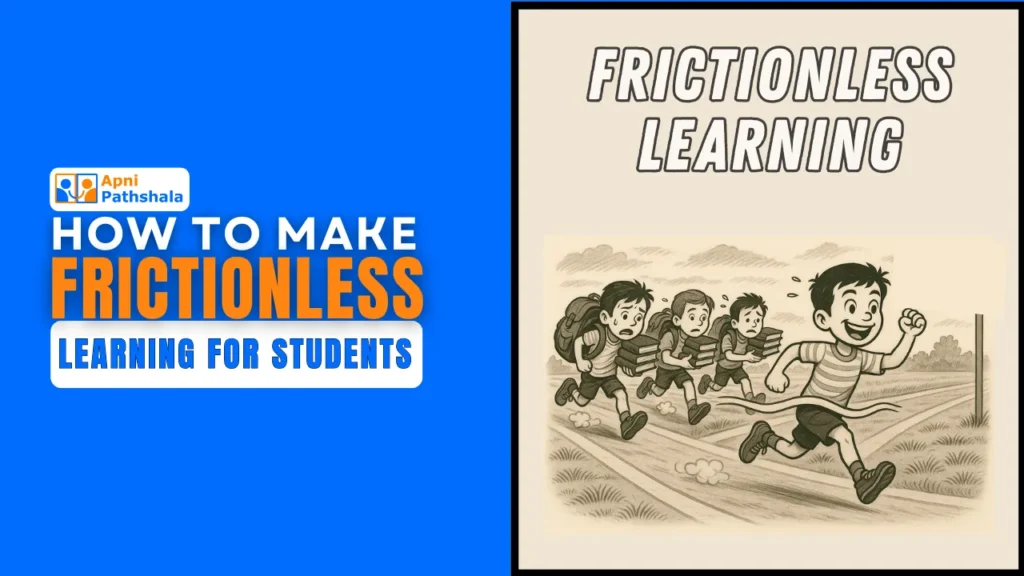
In this blog, let’s discover how we can make learning frictionless, easy, smooth, natural, and joyful.
Understanding the Friction in Learning

Before we talk about Frictionless learning, let’s first understand what creates friction in the first place. These barriers can make even the brightest student lose interest in learning.
Here are some common frictions in learning:
- Rote Learning: Memorising without understanding disconnects students from real-world application.
- Exams as Metrics of Success: Students start studying to score marks, not to learn.
- Fear of Being Wrong: The pressure to be perfect stops creativity and exploration.
- One-Size-Fits-All Teaching: Every child learns differently, yet most schools teach the same way.
- No Freedom to Explore Interests: Students rarely get to choose what excites them.
- Pressure from Parents and Society: Expectations can replace joy with anxiety.
- Repetitive Routine with No Creativity: A lack of creative freedom dulls imagination.
- Unclear Future Paths: Without guidance, learning feels disconnected from real-life goals.
If these frictions continue, students may experience skill stagnation. This means their skills stop growing because they do not keep up with changes in business needs, technology, and market demands.
(Read our blog for more details – Skill Stagnation: How to Survive the Silent Career Killer?)
When learning becomes repetitive and pressured, students stop developing new skills. They become afraid to try, fail, or explore. Over time, this stagnation kills creativity and confidence, leaving learners stuck instead of growing.
So how do we fix this?
How to Make Learning Frictionless

Learning shouldn’t feel like a task. It should feel like an adventure, easy, exciting, and personal. Here’s how we can make that possible:
1. Build a Strong Foundation
Start by teaching the basics that truly matter: reading, writing, and problem-solving in ways that spark curiosity. When students understand how to learn on their own, they become self-directed learners. They don’t just wait for teachers to explain; they explore, experiment, and evolve independently.
2. Give Children the Freedom to Choose
Every child deserves the freedom to learn at their own pace and in their own way. We should create spaces for them to express their choices, explore their interests, and build the courage to follow their paths, with teachers as guides.
3. Replace Pressure with Responsibility
Instead of forcing students to learn, help them understand why learning is important. When students take responsibility for their growth, learning becomes a choice, not a chore.
4. Create Safe and Fun Learning Spaces
A classroom should never feel scary or judgmental. Students learn best when they feel comfortable and valued. A non-judgmental, fun, and flexible environment allows them to make mistakes and grow from them.
5. Blend Technology Smoothly into Learning
Technology is the present, not just the future, and children should embrace it rather than fear it. Making technology a seamless part of learning helps students adapt quickly and confidently to tools like Apna PCs, Eklavya AI, and creative software, preparing them to be future-ready instead of future-frightened.
6. Encourage Peer Learning
Learning doesn’t always come from teachers it can come from friends, too. In a peer learning environment, older students guide younger ones, helping them understand through shared experiences. This builds teamwork, empathy, and leadership skills.
7. Let Students Co-Create Their Curriculum
Why should curricula always come from textbooks? Let students help design what they learn. By giving them a say in choosing subjects and projects, we build adaptive learning environments, ones that truly meet their needs and interests.
8. Introduce Adaptive Learning and Microschools
If you’re wondering whether frictionless learning actually exists, it does. The answer lies in microschools.
Microschools are small, community-driven classrooms designed around student-centric learning. These spaces allow children to learn at their own pace, collaborate with peers, and use technology effectively. Teachers act as mentors, helping students discover what they love and how they can grow.
At Apni Pathshala, we’ve created these environments through our Learning PODs digital learning centres that blend technology, mentorship, and flexibility. Each POD focuses on reducing friction by making learning natural, interactive, and joyful.
Conclusion
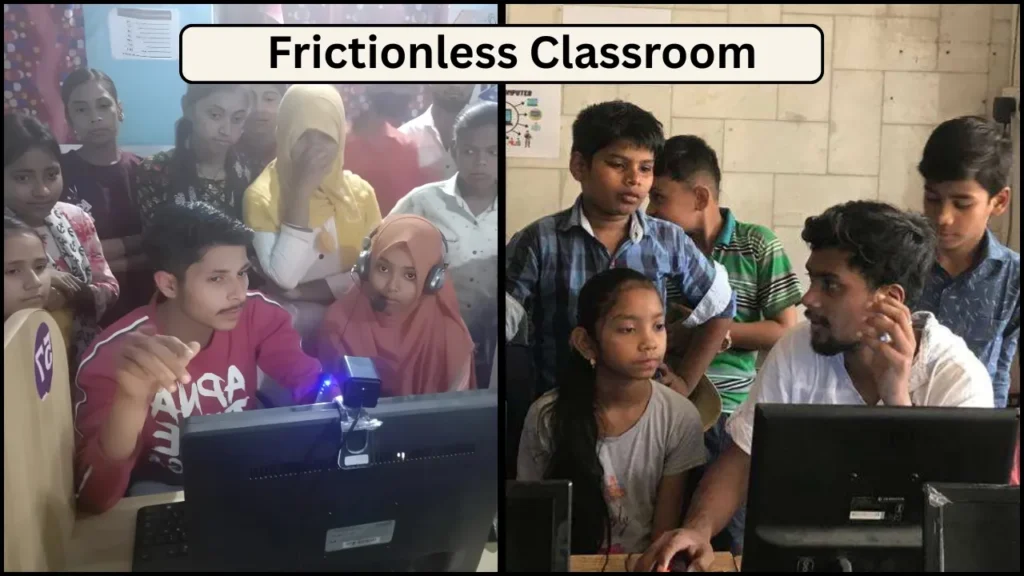
So, can learning really be friction-free? Yes, but not by accident.
It happens when parents, teachers, communities, and schools work together.
A Frictionless classroom is not one without challenges; it is one where children feel supported, understood, and encouraged. It is a place where learning flows naturally because curiosity is alive.
At Apni Pathshala, we are committed to removing these frictions by creating Learning PODs and microschools that celebrate exploration, creativity, and student-led learning.
When children build the skills to learn on their own, when they are free to choose their learning paths, when technology becomes their friend, and when classrooms feel safe, learning transforms from a burden into a journey.
And that journey belongs to every child.
If this vision excites you, and you want to help children experience a Frictionless learning journey, you can take the first step.
You can start a Learning POD in your community, support a microschool, or simply explore more about how Apni Pathshala is transforming education.
To learn how self-learning begins, read our blog on Mastering Self-Learning.
To see how classrooms can change students, read the blog “How Apni Pathshala Is Turning Students into ACTiZENS” by Dr Aniruddha Malpani.


One Response
Really loved reading this. The points about friction in learning felt so true, because this is exactly what we see with kids around us. The way you explained why children lose interest and how small changes can make learning smoother was very relatable. I also liked how you connected freedom, safe spaces, and technology in such a practical way. The idea of microschools and PODs genuinely sounds like something India needs right now. This blog actually makes you think about how learning should feel for a child, not just how it’s traditionally done.