

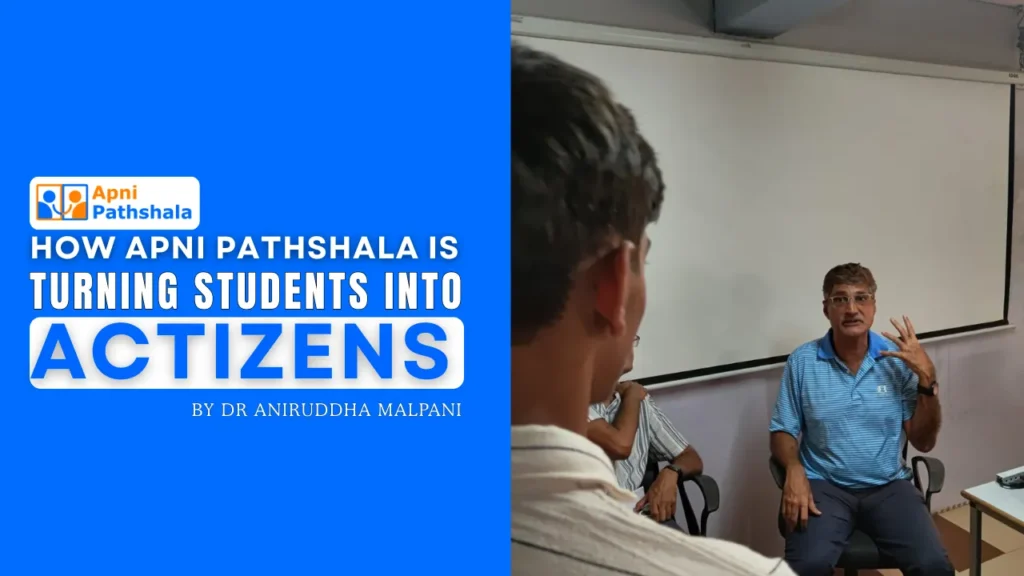
We often talk about India’s demographic dividend with pride, the world’s youngest population, with over 600 million under the age of 25. But here’s the truth: if these young minds are not nurtured to become responsible, thinking, and active citizens, this dividend can quickly turn into a disaster.
That’s why I believe education should be less about filling minds with facts and more about lighting fires of curiosity, courage, and civic commitment. The goal should not just be to produce job seekers, but to nurture ACTiZENS, Alert, Informed, and Active Citizens.
At Apni Pathshala, this is the very mission we’ve taken on. Our learning pods, small, community-based, technology-supported centers, are safe spaces where students learn with and from each other. They are not just learning what to think, but how to think, and more importantly, how to act.
What does “ACTiZENS” really mean?
ACTiZENS means Alert, Informed, and Active Citizens who uphold the values of democracy and justice in their daily lives. They know their rights, think for themselves, ask questions, and practice democratic values. An ACTiZEN doesn’t just study civics; they put it into action through responsible choices.
The First Act of Citizenship: Choosing What to Learn
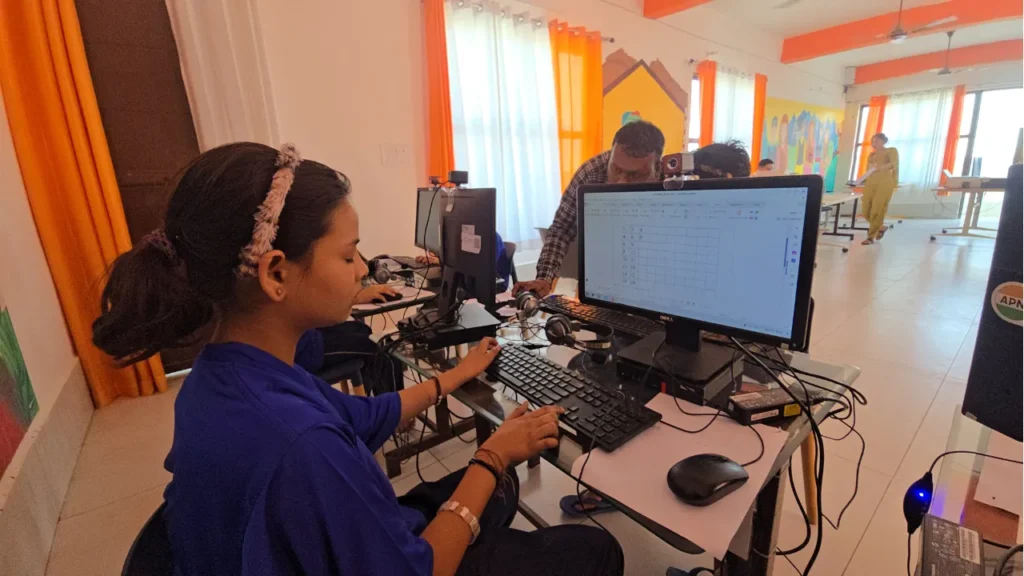
In most traditional schools, students are passive consumers of a rigid curriculum. Every minute is scheduled, every subject mandated, every question already answered. There’s little space to develop initiative, debate ideas, or learn how to ask good questions, the very skills that make a democracy work.
In contrast, Apni Pathshala gives students autonomy. They decide what to learn, how to learn it, and at what pace. We don’t impose syllabi; we encourage curiosity. Some students dive into learning how the Constitution works, others explore India’s water crisis, or learn to code a website. Their learning is driven by real-world problems, not textbook chapters.
This is where citizenship begins, not in a civics lesson, but in the lived experience of choice and responsibility. When students learn to take charge of their own learning, they develop agency. And agency is at the heart of democracy.
Democracy in Action: Learning Together, Leading Together
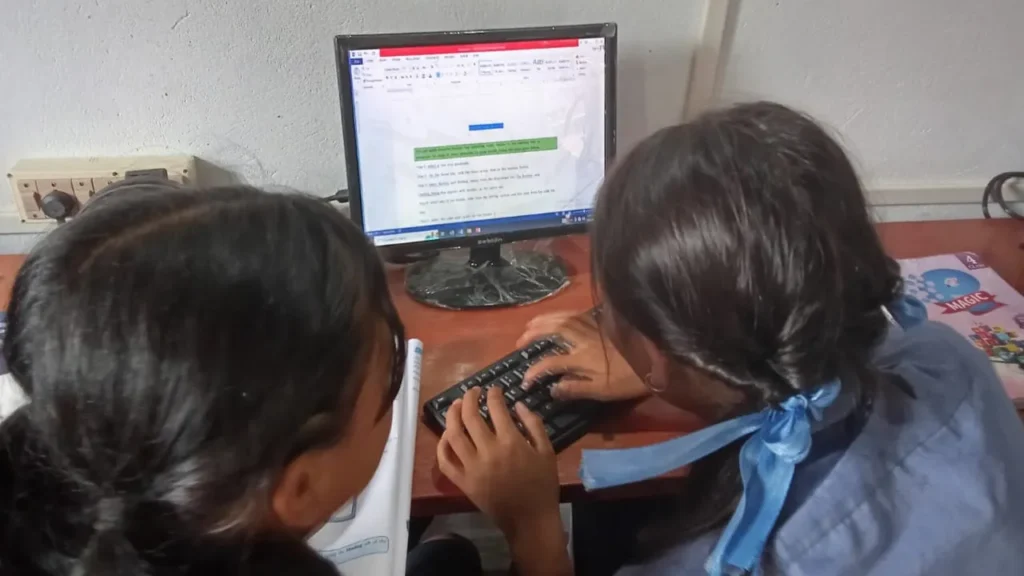
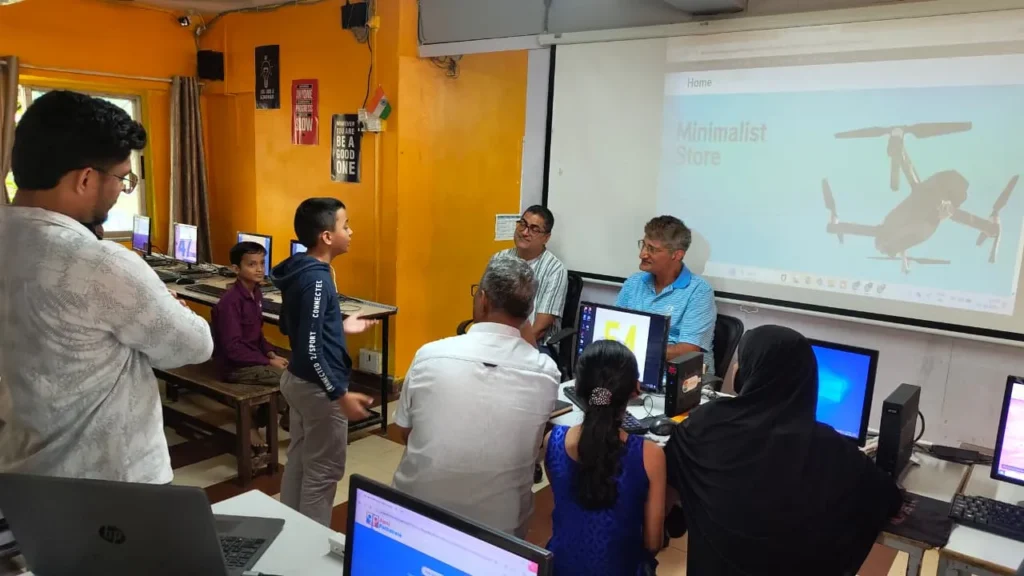
Our community learning pods are co-operative by design. Students come from different ages, backgrounds, and skill levels. There are no fixed teachers; instead, every learner is also a peer tutor. A 12-year-old may teach Scratch coding to a 10-year-old, while learning essay writing from a 14-year-old.
This horizontal learning structure mimics the ideal of democratic functioning: no one has a monopoly on knowledge or power. Every voice matters. Every contribution counts. Every learner learns to lead and to follow.
Students negotiate what projects to work on together. They take votes. They deliberate. They learn how to resolve conflicts and share resources. These aren’t just academic exercises; these are early democratic experiences. They are living the values of cooperation, participation, and empathy that sustain any healthy republic.
From Civics Classrooms to Civic Action
I deeply admire the work Desh Apnayen is doing through classroom-based activities on elections, local governance, and constitutional values. These lessons are the building blocks of an informed society. But how do we move students from passive understanding to active engagement?
At Apni Pathshala, we build bridges between learning and action. When students learn about how local governments function, they don’t stop at theory. They go out into their community and map public amenities. They interview local leaders. They attend ward meetings. One pod even wrote letters to their corporator demanding better garbage collection. That’s not homework, that’s active citizenship.
We encourage our students to work on real-world projects:
- Running community surveys on school dropout rates
- Creating YouTube explainers on voting rights
- Maintaining websites for citizen activists like Mr. Kamalakar Shenoy
- Helping senior citizens file RTIs online
These acts of engagement don’t just teach them about democracy; they let them practice it.
ACTiZEN Role Models: Heroes in Our Midst
When we speak of role models in civics, names like Mahatma Gandhi and Dr. B. R. Ambedkar come to mind. But I also urge students to look closer, because the most powerful ACTiZENs are often working quietly in our own neighborhoods.
One such hero is Mr. Kamalakar Shenoy, an RTI activist and relentless crusader for good governance. Our students help him run the website “People vs. Corruption“, a live repository of public interest litigation and RTI cases. In return, they get to witness how one ordinary citizen can take on powerful interests with the force of truth and persistence.
This intergenerational collaboration is magical. Seniors bring wisdom, conviction, and purpose. Students bring tech skills, creativity, and energy. Together, they create impact and inspire each other. When children see adults fighting for the public good without expecting money or fame, it gives them a template for ethical citizenship.
What Made Me an ACTiZEN?
People often ask me: “Dr. Malpani, you’re a doctor. What made you take up education and activism?”
The answer is simple: I believe being a good citizen is not a job title, it’s a mindset. My own father taught me to question authority respectfully and to never shy away from doing the right thing, even if it was inconvenient. My teachers sparked my love for logic and argument. And my patients, who trusted me during their most vulnerable moments, taught me the value of empathy and integrity.
When I saw the education system failing millions of students, churning out degree holders who couldn’t think independently or act ethically, I realized I had to act. Apni Pathshala was born from this impulse: to create a space where children don’t just study democracy but live it.
Words of Encouragement for Desh Apnayen’s Champions
To the teachers and volunteers running Desh Apnayen’s classroom activities across India: I salute you. You are doing the quiet, patient, and transformational work of seeding the next generation of ACTiZENs.
Remember: Every question you ask, every debate you moderate, every doubt you allow to flourish is a step toward a more resilient democracy. Don’t underestimate the impact of these small interventions. Even one class on electoral literacy can shape a future voter. Even one classroom debate on local governance can produce a future sarpanch or social reformer.
You’re not just teaching civics, you’re modeling it. When students see you uphold fairness, encourage dissent, or admit when you don’t know something, they’re absorbing the values of citizenship from your behavior, not just your words.
How Can We Strengthen Indian Democracy?

We must start young, and we must start local. Democracy isn’t just about Lok Sabha elections; it’s about everyday decisions made at home, in schools, in mohallas.
To strengthen democracy, we must:
- Give children the right to question and express themselves
- Support schools that prioritize cooperation over competition
- Make technology a tool for civic participation, not just consumption
- Celebrate ethical behavior and public service as much as academic success
- Provide access to real role models, not just celebrities, but citizen leaders
If we want young Indians to vote wisely, protest peacefully, file RTIs, clean lakes, build libraries, and fight injustice, we must create environments where they can practice these things now.
That’s what we strive to do at Apni Pathshala. Our students don’t recite the Preamble. They live it.
Conclusion
Democracy, like learning, cannot be outsourced. It must be practiced, individually, locally, and daily.
The best way to raise ACTiZENs is not to lecture them, but to trust them. To give them access to tools, mentors, and opportunities. To let them stumble, explore, and take initiative. That’s what Apni Pathshala stands for, and I believe Desh Apnayen’s work aligns perfectly with this vision.
Let’s work together to raise a generation that doesn’t just salute the flag, but holds the government accountable to it.
Because India doesn’t need more toppers. It needs more torchbearers.
If you care about civic sense in India, read our blog titled “How to Improve Civic Sense in India.”
If you believe that mere criticism won’t change the nation, check out our blog on how Apni Pathshala is transforming BMC schools.

One Response
This blog explains citizenship in a way that feels very real and easy to understand. I liked how it shows that becoming an ACTiZEN is not about big speeches or long chapters, but about small actions that students do every day. The examples from the learning pods make it clear that children learn citizenship best when they live it, not just study it in a book. The stories about projects, community work, and helping activists were very inspiring. It shows that even young students can make a real difference when they get the right environment. This blog is a good reminder that building a strong democracy starts with giving students the freedom to think, question, and act.