
Introduction
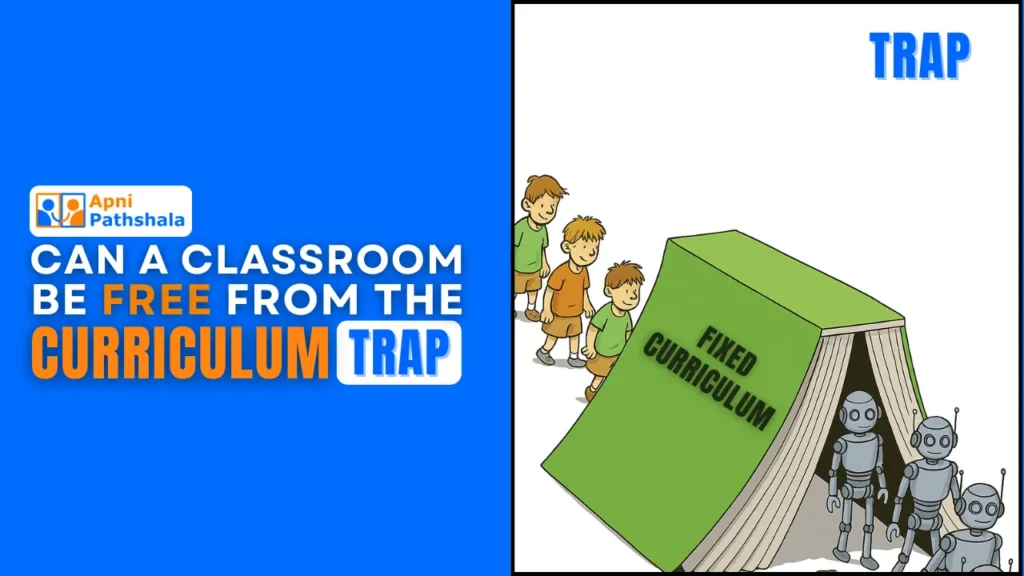
Can a classroom run without a curriculum?
If your first thought is “No, that’s impossible,” you’re not alone. We thought the same until a conversation changed everything.
Recently, our team at Apni Pathshala had a meeting with Dr. Aniruddha Malpani, who suggested something bold: a classroom that doesn’t depend on a fixed curriculum. Naturally, we were surprised. How could a class exist without one?
But then he explained something that shifted our perspective completely. He spoke about adaptive learning, a model that focuses on students, not marks, not exams, not grades. A model where the curriculum bends and grows according to each child’s needs.
And that’s when we realized maybe the problem isn’t that classrooms have a curriculum. Maybe it’s that they’ve stopped adapting.
Let’s explore how a classroom can actually work without being trapped by a fixed syllabus and why that’s the future of education.
What Is a Curriculum, and Why Is It Limiting?
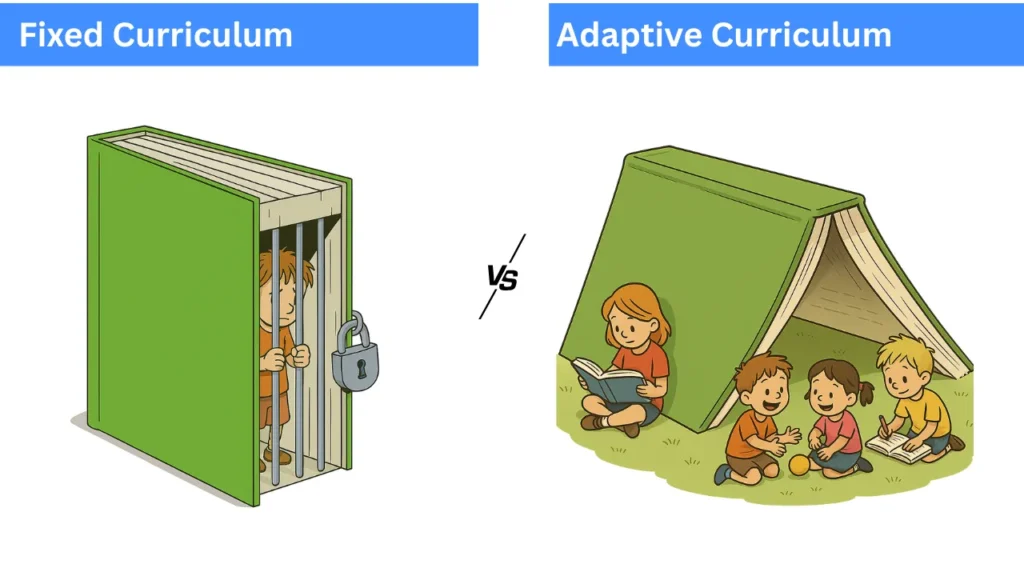
A curriculum is simply a plan for what students should learn.
On paper, it sounds good. But in practice, it often becomes a trap.
Traditional curricula are built to test memory, not creativity. They reward those who can memorize quickly, not those who can think deeply.
That’s where the problem starts.
In most classrooms, learning becomes a race to complete chapters, prepare for exams, and achieve grades. But learning isn’t a race; it’s a journey. When we focus too much on speed and scores, we forget that every child learns differently.
So the real question isn’t “Do we need a curriculum?” but “Do we need the same curriculum for every student?”
Why Fixed Syllabus Fails but Personalized Learning Wins
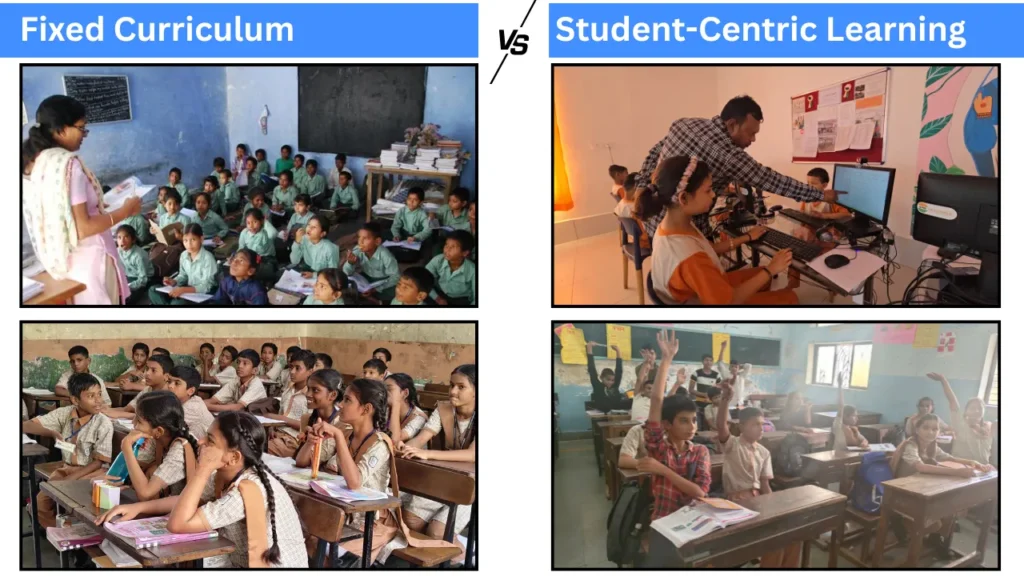
Dr. Malpani gave us a great example.
He said, “Doctors don’t use one treatment for every patient. They first diagnose, then prescribe. Each case is unique.”
If every child learns differently, why are we still teaching everyone the same way?
That’s where adaptive learning comes in. In adaptive classrooms, the curriculum isn’t fixed; it evolves based on the students’ pace, interest, and strengths. Teachers become guides, not just lecturers. They create flexible lesson plans that fit the student, not the system.
To make this happen, teachers and POD leaders need to keep learning too. If they stay stuck in old methods, students will too. That’s why at Apni Pathshala, we encourage our teachers to use AI tools and real-time data to design lessons that respond to each learner.
We’ve already started testing this through our Apni Prerna, which helps teachers track learning progress and identify areas where students need more support. This kind of adaptive teaching is the first step toward classrooms that focus on growth over grades.
The Role of Self-Learning in Adaptive Education
If you’ve ever taught a child something new, you know that real learning happens when curiosity takes over.
That’s why we believe every student should be trained for self-learning, the ability to explore, research, and grow independently.
Teachers and parents have a big role here. Instead of teaching only what’s in the book, they can teach how to find answers, solve problems, and keep learning.
The earlier students develop self-learning habits, the stronger they become as independent thinkers.
(You can explore this more in our related blog: Master Self-Learning in 2025)
How Microschools Can Break the Curriculum Trap
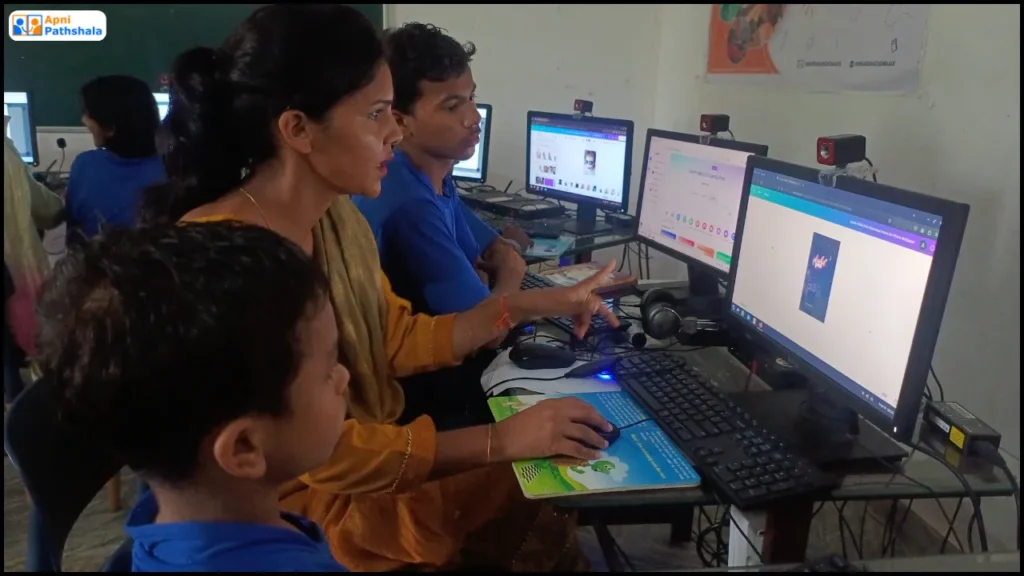
One of the most promising solutions to rigid education systems is microschools, small, community-driven learning centers that focus on personalized teaching.
At Apni Pathshala, our PODs (Digital Learning Centers) function just like microschools. They are not bound by a single curriculum. Instead, they mix digital tools, local relevance, and student choice to create flexible learning experiences.
In these classrooms, students learn coding one day, storytelling the next, and robotics the day after, based on interest and progress. It’s not about “finishing” a book; it’s about discovering something new every day.
Microschools prove that the future of learning isn’t about scaling one model, it’s about giving teachers and students the freedom to build their own.
Explore more about microschools by reading our blogs.
Conclusion
Our traditional education system often forgets that learning is human, not mechanical.
Curricula that were once meant to help now hold students back, creating pressure instead of purpose.
India has one of the world’s largest young populations. To help them thrive, we need classrooms that encourage curiosity, creativity, and adaptability.
The change starts small in a classroom, a POD, or a microschool where teachers listen more, students explore freely, and parents see learning as growth, not grades.
To fix education, we don’t need to remove the curriculum.
We just need to free it from its cage.
If you believe learning should be personalized and future-ready, you can be part of the change.
Start your own POD (Digital Learning Center) with Apni Pathshala and bring adaptive, student-focused education to your community.
Learn more about how to start your POD and apply now.
If you are a student, then visit our top recommended courses page.
Don’t let this opportunity slip away.
Later and tomorrow never come.

5 Responses
At start: “Hmm? This is impossible. A classroom without curriculum is just unthinkable.”
At the end: “Wait, maybe thus can be the future or education.”
Hmm, it sounded impossible at first, but now it feels like this could actually be the future of education.
Very nice
Thankyou.
This blog explains the idea very nicely. Most of us grew up thinking that a classroom cannot run without a strict syllabus, but this article shows a different side. The examples make it easy to understand how a fixed curriculum can actually limit students, and how adaptive learning can help them grow at their own pace. The connection with self-learning and microschools also feels very real because children learn best when they are curious, not when they are rushed. The message is simple: learning should change according to students, not the other way around. This is a very fresh way of looking at education.