
Introduction
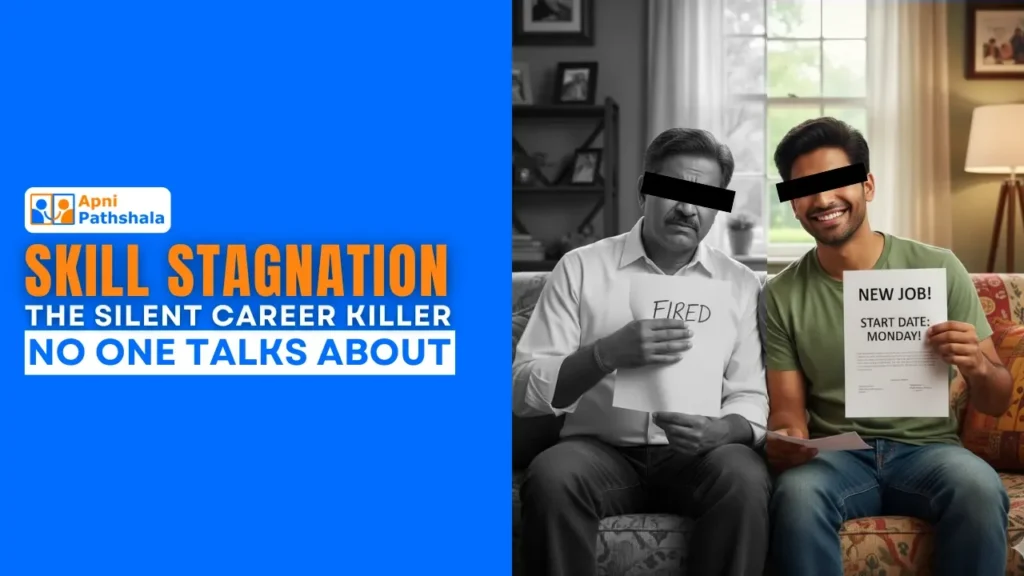
Imagine a marketing professional with ten years of experience applying to fifty jobs and getting zero callbacks. Meanwhile, a fresh graduate with AI skills lands a job within weeks.
The difference isn’t a decade of experience or a degree. It’s Skill Stagnation
In 2025, the job market isn’t just competitive. It’s brutal. And the silent killer behind mass unemployment, career plateaus, and hiring freezes isn’t a lack of jobs, it’s a catastrophic mismatch between what workers know and what the market demands.
Many of us have been shaped by an education system focused on memorization rather than mastery. Schools often prioritize correct answers over curiosity, leading to stagnation when graduates enter evolving workplaces.
Instead of blaming, we need systems and strategies that promote lifelong learning rather than mere compliance.
Here’s the harsh reality: 39% of your current skills will become outdated or irrelevant by 2030. That is fewer than five years from now. And for many workers, that transformation is already happening.
Just look at the numbers:
- Over 12,000 jobs were cut in India’s TCS, the company’s largest layoff ever (Reuters).
- Experts predict 50,000 IT workers in India could lose jobs in “silent layoffs” by year-end (Times of India).
- By 2030, 92 million jobs are expected to disappear, replaced by 170 million new ones that require new skills (World Economic Forum).
This is not just a short-term trend; it represents a fundamental shift in skills. Only those who continue to learn will thrive. That’s why today’s students are increasingly choosing to focus on AI learning. But first, let’s begin by defining what skill stagnation is.
What Is Skill Stagnation?
Skill stagnation occurs when a worker’s skill set fails to evolve with rapidly changing business needs, technological advancements, and market demands.
It’s not just about lacking new skills; it’s about your existing skills losing value. The world is moving quickly, and if you don’t keep up, you risk falling behind. This can lead to career stagnation.
Why Skill Stagnation Is on the Rise
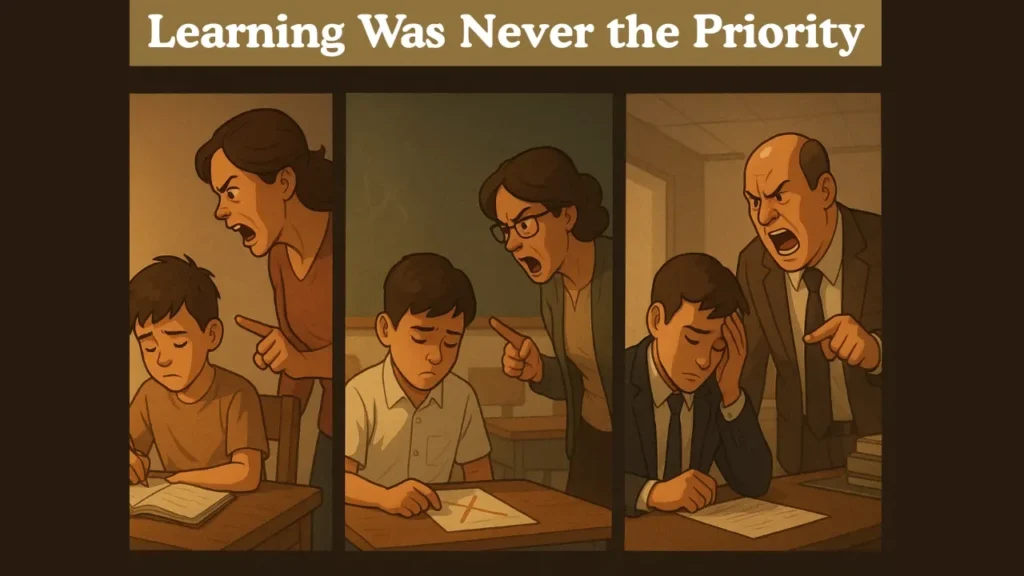
Skill stagnation doesn’t happen overnight. It builds slowly as we forget to prioritize learning. Staying committed to learning is essential to avoid this trap and keep your skills sharp!
1. Schools Reward Toppers, Not Learners
Traditional classrooms often prioritize syllabus completion, marks, and exams. Students practice reproducing what’s taught rather than building the habit of figuring things out. When the test ends, learning ends. In real jobs, the test never ends.
2. Learning Stops After Graduation
Many people stop learning once they finish college. But technology never stops.
A marketing graduate who learned print advertising in 2015 now competes in a world of AI-driven ad systems and data analytics.
3. Companies Aren’t Training Enough
Businesses expect employees to “keep up” on their own. Training budgets shrink, but job expectations rise. The result? Overworked teams with outdated skills.
4. Comfort Zone Syndrome
Staying in the same job for a long time can seem safe, but it can also be risky. When you stop being curious, your career can stop moving forward. Check if you’re in your comfort zone, or you might get stuck in this trap.
5. Automation and AI
Machines don’t get tired, and they’re learning faster than humans. Any repetitive task you do can and will be automated if you don’t adapt.
Now we can understand how to escape this trap: by continuing to learn. It may seem simple, but prevention is indeed better than a cure. Let’s look at some tips for overcoming skills stagnation.
10 Tips on How to Deal with Skill Stagnation

If you’re reading this, you’ve already taken the first step toward awareness. Now it’s time to act.
Here are ten practical ways to fight skill stagnation before it fights you. So grab your pen and paper, write these down:
1. Review Job Skills Monthly
Create a list of your current skills and those you need to achieve your goals. Review job postings in your field for guidance.
Outline what you have and what’s missing, prioritizing the most important and urgent skills. This exercise clarifies your current standing and future steps.
2. Prioritize What Matters
Conduct market research on job descriptions for your desired roles. Review 5 to 10 postings and note the skills that repeatedly appear.
If “Python” appears in 8 out of 10 postings, prioritize it. Focus on the most common skills and start learning those, avoiding skills that are rarely mentioned.
3. Learn One Skill at a Time
Focus on mastering one new skill each month instead of trying to learn many at once. Dedicate 30 days to it, master it, and then move on. Slow and steady wins in real learning.
4. Block One Hour Daily for Learning
Schedule learning like any important meeting and protect that time.
After each session, reward yourself, enjoy a snack after finishing a lesson, or watch an episode of your favorite show after completing a project. Small rewards boost motivation!
5. Keep a Learning Journal
Take notes on ideas, terms, or tools to revisit later using a diary or phone. Write about what you learned today, what confused you, what made sense, and what you want to explore further.
This journal will serve as your personal learning roadmap.
6. Use AI as a Study Partner
Platforms like ChatGPT, Gemini, and Notion AI quickly simplify complex concepts. Use AI as a study partner in your daily learning routine.
Got a tough topic? Ask AI to explain it simply. Need practice questions or a study plan? AI can create those instantly. Think of it as your 24/7 personal tutor.
7. Practice What You Learn
Apply your knowledge right away with small projects. You are your own competition, aiming to surpass your past results. If you learned HTML, create a simple webpage; if you studied Excel, build a budget tracker. Don’t just watch tutorials, put your skills to the test!
8. Build a Portfolio
Demonstrate your learning with projects or certifications. Go beyond updating your resume, create a LinkedIn profile to share your work, tweet about your learning, and join Facebook groups. Consider building a portfolio website so employers see your work online, not just your words.
9. Join Learning Communities
Surround yourself with others who are also learning. Join relevant communities on Reddit, Discord, or Facebook, or create a WhatsApp group with friends. Being around fellow learners makes it easier to stay motivated.
10. Track Your Progress Weekly
Reflect on your week every Sunday, focusing on what you accomplished and the challenges you faced. Avoid learning new things; instead, prioritize rest and give your brain time to recover and cement your knowledge.
Start now by visiting our top recommended courses to kickstart your learning. Many of these courses are free to enroll in.

Conclusion
Skill stagnation might be real, but so is skill transformation.
Career stagnation might be painful, but career breakthroughs are possible.
The question isn’t whether you can change.
It’s whether you will.
Right now, someone with half your experience is learning the skills that will make them unstoppable.
Someone who was laid off six months ago just landed their dream job, because they chose to learn, not complain.
The future is being written at this very moment. The question is, will your name be in it?
The future belongs to the curious. The adaptable. The ones who treat learning like breathing are essential, continuous, and non-negotiable.
So here’s my question: are you ready to stop being a victim of skill stagnation and become the master of your own growth?
Then take one small action today:
- Visit the top recommended courses page of Apni Pathshala to begin your learning journey.
- Explore the Chalo Seekhe blogs to find more learning opportunities.
If this blog opened your eyes, share it with someone who might be stuck in their career.