
Introduction
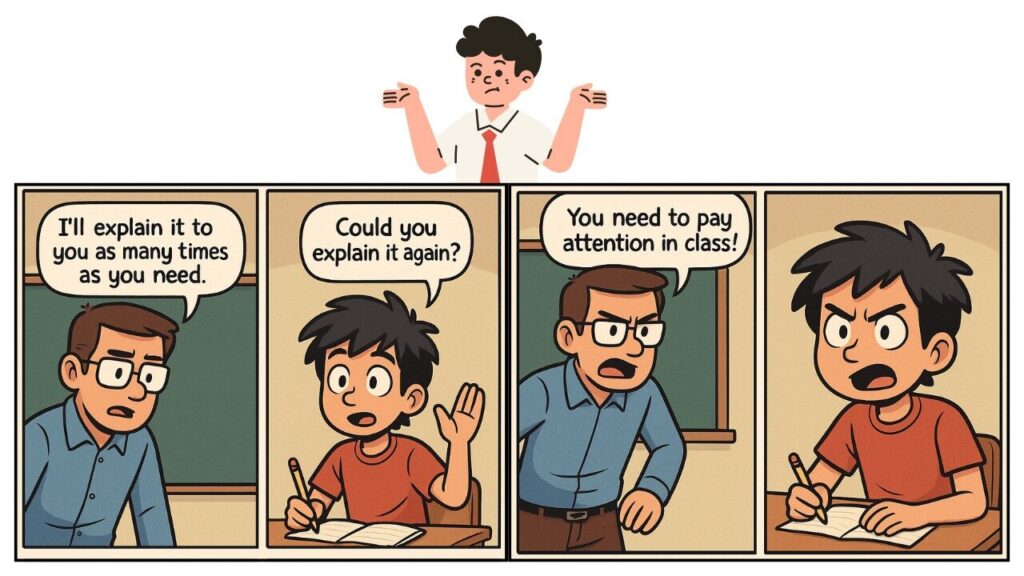
Remember when your teacher said, “Ask me as many times as you want if you don’t understand,” and then got angry when you actually did?
Well, times have changed.
Now, AI doesn’t get angry. You can ask it the same question a thousand times, and it’ll patiently explain until you understand, in simpler and clearer ways each time.
We’re lucky to live in an era where AI has made learning easier, faster, and more personalized. It has changed not just how students learn, but also how teachers teach.
Recent studies show just how big this shift is:
- 75% of students feel more motivated in personalized AI learning environments, compared to only 30% in traditional classrooms. (Source)
- 86% of students regularly use AI tools for their studies, and over 80% want AI to be integrated more deeply into education. (Source)
- In India, over 85% of school students now prefer using AI for career counseling and academic support instead of traditional counselors. (Source)
AI in education is no longer just a tool; it’s becoming a study partner, mentor, and guide for millions of students.
But the big question is: why are students choosing AI over other learning methods?
Chalo Seekhe!
Why Are Students Choosing AI in Education?
Every student dreams of learning in a way that feels simple, fun, and personal, and that’s exactly what AI makes possible. It’s becoming the go-to learning companion for students across India.
Here’s why more and more learners are turning to AI every day:
1. Easy to Use and Always Available
AI tools are incredibly simple to use. Most of them work directly through a web browser, so you don’t need to download or install anything. Whether you’re on a smartphone, computer, or even a classroom projector, AI is just one click away. Many AI platforms also have mobile apps, meaning students can learn anytime, anywhere, even on the go.
2. Personalized Learning for Every Student
AI adjusts to each student’s pace and style of learning. It offers adaptive lessons and intelligent tutoring systems that provide one-on-one guidance. Students can chat, ask questions, and learn through conversation just like having a personal tutor who knows exactly where they struggle and what they need next.
3. Smarter Homework and Exam Help
AI doesn’t just give answers; it teaches you how to find them. Whether it’s solving math problems, writing essays, or preparing for exams, AI explains every step clearly. With the right prompts, it even interacts like a real study partner, helping students understand concepts deeply instead of memorizing blindly.
4. Breaking the Language Barrier
AI understands multiple languages, even local dialects and slang. Students can now learn coding in Hindi, science in Marathi, or math in Tamil. With translation and voice tools, learning has become inclusive, giving every student, no matter where they live, the same opportunity to grow.
5. Everything in One Place
Instead of jumping from one website to another, AI keeps all your learning in one space. You can ask where information came from, get reliable sources, and even summarize pages instantly. It saves time, reduces confusion, and keeps the focus on learning, not searching.
6. A 24/7 Tutor Who Never Judges
AI never gets tired, angry, or annoyed. It’s available day and night, ready to answer any question, no matter how basic or repetitive. Students can learn at their own pace, without fear of embarrassment or hesitation.
In short, AI makes learning simpler, faster, and more personal.
But how much do students actually use it in real life? Let’s find out.
Are Students Actually Learning with AI?

At Apni Pathshala, we’ve seen firsthand how AI has become a part of students’ everyday learning.
When we implemented Apni Prerna into our Apna PC systems across multiple PODs, it enabled students to become more productive while allowing both students and POD leaders to track their progress.
After discussing with the POD leaders and gathering data from three active PODs, we discovered some surprising results:
| Sr | Platform | Total Time Spent (Minutes) |
| 1 | ChatGPT | 5792 mins |
| 2 | Canva | 2091 mins |
| 3 | 1988 mins | |
| 4 | Scratch | 1725 mins |
| 5 | Typing.com | 1473 mins |
What stands out is that ChatGPT tops the list, showing that students spend most of their time on AI-powered platforms to ask questions, write, and solve problems. Tools like Canva, Scratch, and Typing.com prove that students aren’t just consuming content but creating and learning actively.
This data was collected over one month from 193 students’ Chrome browser activity across LFP Virar, LFP Tardeo, and TechVeer Marol, showing how deeply AI has become a core part of learning in our classrooms.
These PODs also hold AI-focused sessions that teach students to use these tools responsibly. Because when used right, AI becomes a friend who teaches, supports, and inspires.
Conclusion
AI has changed how students learn; it answers instantly, teaches patiently, and personalizes every lesson. However, like any powerful tool, it comes with challenges. If used carelessly, AI can make students too dependent on instant answers, reducing real problem-solving and creativity.
Some might use it to complete assignments without truly learning, and without proper guidance, it can spread misinformation or bias when students trust every answer blindly.
When used with discipline and curiosity, AI becomes one of the best teachers you could ask for. It encourages deep thinking, explains concepts at each learner’s pace, and is designed to empower teachers, making education accessible to everyone from small villages to big cities.
The truth is that AI isn’t inherently good or bad; it reflects how we use it. When used wisely, it becomes the greatest classroom ever built.
If you’re a parent, read our blog: 👉 Top 12 Free AIs for Parents in 2025
If you want to help others learn AI, you can open your own POD.
Learn how here: 👉 How to Open a POD in Your Area.
If you’re enjoying this blog, visit our “Chalo Seekhe” section to learn more and expand your knowledge!