
INTRODUCTION
Welcome to the golden age of learning! You can learn anything, anytime, for free, thanks to YouTube, MOOCs, free academies, and community-driven centers. So, why is the paid course market booming? And why do so many students choose to pay for something they could get for free?
Take India, for example. The EdTech market is already valued at $7.5B in 2024, with expectations to grow to $29B by 2030. That’s a huge jump, driven by demand for skill development, K-12 education, test prep, and online certifications. Invest India
And outcomes tell an even clearer story. Think free courses perform like paid ones? Only 12% of learners complete free courses compared to 85% for paid programs. Learn With Pride
Let’s understand how free vs paid learning actually works and why more and more students are choosing paid courses over quality free resources. What makes paid courses stand out? Why do they seem to deliver better results, even when there are so many free options available? And most importantly, which one should you choose?
| “The concept of ‘free’ tends to lower our expectations and the effort we invest. Anything free is often undervalued.”— Malcolm Gladwell, Author of Outliers |
What is “Free Learning” vs “Paid Learning”?

What is Free Learning?
Free learning gives you access to resources without any cost. This includes:
- YouTube videos
- MOOCs (Massive Open Online Courses)
- Free tutorials and community lessons
- Non Profit PODs
What is Paid Learning?
Paid learning means students pay a fee to access courses or training.
- Cohort-based courses
- Live classes and mentorship
- Verified exams and certificates
- Self Sustained PODs
Free learning gives you access to information, making it perfect for exploring new topics.
Paid learning, on the other hand, is designed to help you finish what you start, with structure, support, and certification.
The Harsh Truths Behind Free Learning
At Apni Pathshala, we recognize that while free learning is a great way to begin, it often brings challenges that limit real learning outcomes. Here’s what our experience across PODs in India has shown:
- Zero Accountability: Without a fee, there’s no pressure to show up. Attendance drops, and assignments often stay unfinished.
- Low Completion Rates: Students often lose interest after a few modules because there’s nothing at stake.
- Certificates Have Less Value: When a course is free, learners sometimes think, “It didn’t cost me anything, so it doesn’t really count.”
- No Cost = No Value Myth: When there’s no fee, learners may think the course doesn’t hold much value.
- Lower Parental Involvement: Parents often say, “It’s free, so let’s put it off”, and that “later” becomes never.
Not everyone overlooks the value of free learning. Many students, especially those who can’t afford formal education, genuinely want to learn. We also work closely with nonprofit NGOs who support these learners, providing them with the help they need to succeed.
LFP Virar POD Case Study
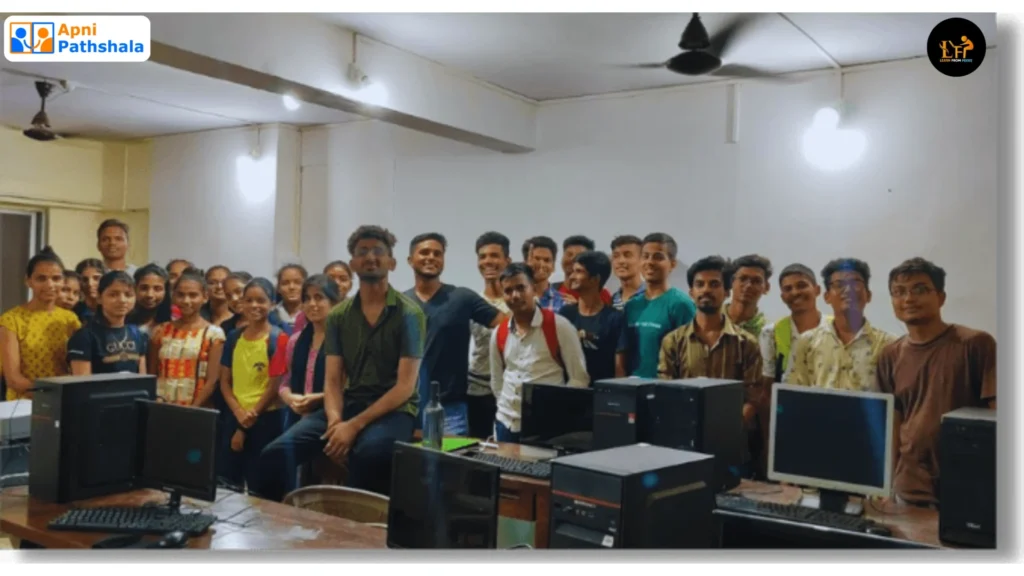
Right after COVID, LFP POD opened free classes in Virar. 128 students signed up. Awesome start, right? But week by week, seats went empty. About 70 kept showing up, and even fewer finished. Many didn’t even bother to come to receive the certificate. When it’s free, it’s easy to skip.
So we tried something small: a ₹100 form fee.
Suddenly, the group got smaller, 25 students, but here’s the magic: all 25 completed. They showed up, asked doubts, did assignments, and proudly took their certificates. That tiny fee made a big difference. It created commitment.
Fast forward to 2025. LFP ran two batches with the same ₹100 rule. 53 students enrolled, and 40 completed. Parents checked in more, students set reminders, and certificates felt earned, not just “free to get.”
Is Paid Learning “Better”?
We’re not saying paid courses are always the best option. What we are saying is that when students invest money, they are more likely to engage and complete the course. Paid programs often offer:
- Structure & Deadlines: You’re more likely to finish when there’s a timeline.
- Mentorship & Feedback: You get personalized support to improve.
- Recognized Credentials: Certificates from paid programs are often valued by employers.
| But here’s the catch, choose wisely. Don’t go for the highest-priced course just because it looks fancy. Pick the one that aligns with your goals and has proven outcomes (check for real testimonials). Avoid courses with big claims and no proof of success. |
You don’t need to throw money at something that isn’t going to get you anywhere. There’s a smarter way to get the best of both worlds, the freemium model.
What is Freemium?
Freemium = Free + Premium.
It’s a model where you start learning for free, and if you like it or need more, you can pay to unlock extra features (like live classes, mentor support, projects, exams, or a verified certificate).
How Freemium Works (for learners)
- Free tier: Watch lessons, try basics, see if you actually like the topic.
- Upgrade (optional): Pay a small fee to get structure, deadlines, doubt-solving, assignments, mock tests, and recognized certificates.
Why Many PODs Use Freemium
- Low risk for students: You test before you invest.
- Better results for serious learners: When you pay even a little, you show up more.
- Fair for families: Only upgrade if the course truly helps your goal.
LFP offers free courses to help students get started on their learning journey. Once they complete the initial courses, students have the option to upgrade to advanced-level courses at a fair price.
This structure ensures that learners are not only exposed to valuable content but are also motivated to continue their education with clear progression: start free → complete → advance.
Conclusion
It’s true that free education gives more people the chance to learn, but the reality is that when something is free, many don’t take it seriously. However, that doesn’t mean centers should stop offering free courses it just means we need to adjust the approach. Instead of calling it “free,” offer scholarships or advertise it as 100% off. You can start with free basic courses and then charge a reasonable fee for advanced courses that are in high demand.
For PODs, we recommend charging a small, honest fee. Not to make a profit, but to build commitment and ensure your POD remains sustainable. A tiny fee transforms “I’ll do it later” into “I’ll show up and finish”. Be transparent: let students know where their fee goes, internet, mentor time, resources, etc. Offer scholarships or refund-on-completion to make sure no one is left behind. The result? Higher attendance, stronger completion, real certificates, and a stronger POD.
For students, don’t judge a course based on its price. Treat learning as an investment, not just another option.
Your next step:
- Start with a win you can finish: Read our guide, Top 5 Free Courses with Certificates, and complete one this week.
- Level up skills with: Top Apni Pathshala recommended Courses.
If you’re interested in learning at a POD, check if there’s a POD near you on our PODs page and start your learning journey today.