

Introduction
Let’s talk about people who guard us every single day. While we enjoy festivals, sleep at night, or celebrate holidays, they are still on duty. Yes, I’m talking about the Indian police.
Now, here’s the truth we don’t like to think about: even though they protect us, they themselves often lack protection in one very important area, digital skills.
Did you know?
- India has only 155 police personnel per 100,000 people, while the UN says the number should be at least 222.
- When it comes to technology, the situation is worse. In 2022, there was just one computer for 11 police personnel in the country. In some states, one computer had to be shared by 30 officers!
- In many police colonies, including Maharashtra, only a handful of officers or their family members know how to properly use computers.
If those who stand between us and criminals lack digital literacy, the entire safety chain is weakened. That’s why we must empower our protectors with digital knowledge and training, so together, we can fight and overcome these threats as a stronger, safer society.
This urgent need gave birth to TechVeer, an initiative by Apni Pathshala to empower police officers and their families with computer education, digital literacy, and AI awareness.
But TechVeer is not just a program. It’s a story of transformation. Let’s dive in.
Chapter 1 – The Reality Before TechVeer
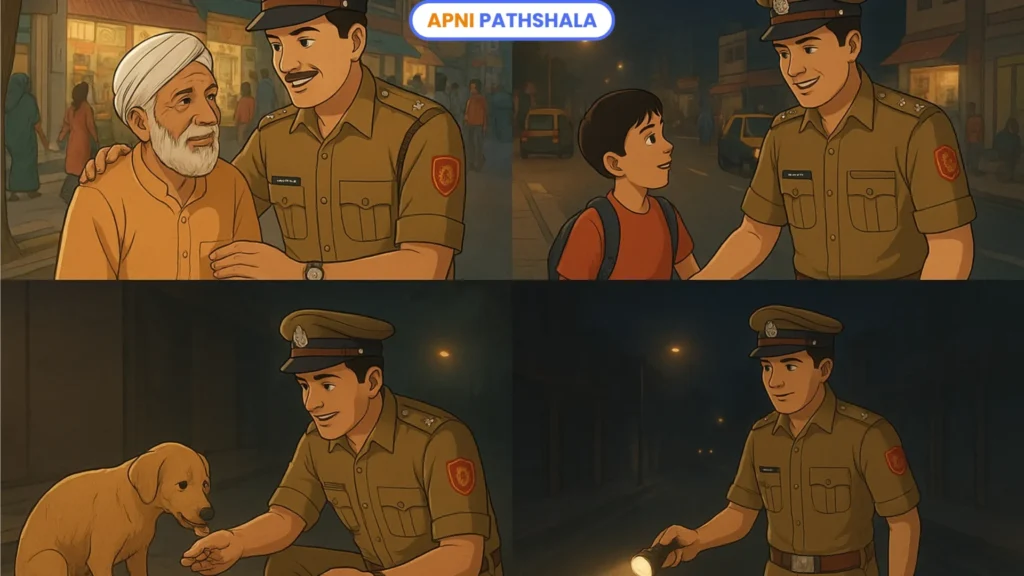
You know what’s really sad? Imagine being a police officer. You already have super long hours, weird night shifts, and a job full of stress. And then… when it comes to computers, emails, or even typing, so many of them are lost. Our team talked to police officers, and the truth shocked us; many had never really used MS Office, typing tools, or even email properly.
But it’s not just the officers. The kids in police colonies, students who should be learning for the future, had no real path to explore basic computer courses or new AI tools. That means they were missing out on skills that could shape their careers.
And what about parents, especially mothers? Many had almost no access to digital skills that could help in daily life, like online banking, learning apps, or even staying safe from scams.
This isn’t only about jobs. It’s about survival in a digital world. Cybercrime doesn’t wait. If police families stay behind in digital learning, the whole community stands at risk. That’s why the need for something like TechVeer became so clear.
Chapter 2 – How TechVeer Was Born
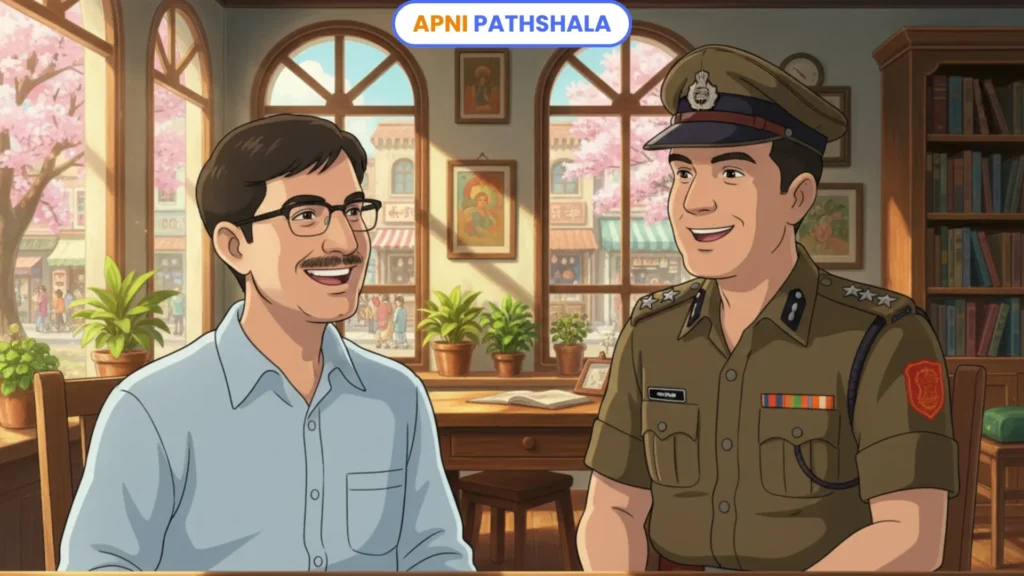
So here’s how the story of TechVeer really began. One day, Dr. Aniruddha Malpani was chatting with his friend, a Special Branch officer. They were talking about Apni Pathshala and how it was helping build a Digital India, brick by brick. The officer was amazed! He looked at the idea and said, “If children in villages can learn computers, then why not police families too? We also need this.”
He told Dr. Aniruddha Malpani that in police colonies, digital literacy was almost missing. Officers didn’t know how to use even basic computer tools, and their families had no chance to learn either. He even had a little space available. That’s when both of them decided to set up one small POD inside a police colony, just as an experiment.
But they didn’t know that this “small experiment” would change the lives of many policemen and their families forever.
That’s how the idea of TechVeer was born. “Tech” means technology knowledge of the future. And “Veer” means the brave protectors of our police. Together, TechVeer became the place where protectors learned to protect themselves in the digital world, too.
The first POD started in Naigaon. Slowly, the number of students kept increasing. More and more families joined. So Malpani sir and his officer friend decided to expand and open another POD in Marol. This was led by Saiprasad Poojari, who also led the LFP (Learn From Peers) Tardeo initiative.
The first sessions were simple but powerful:
- Basic Typing & MS Office – so officers could finally write reports and handle files with confidence.
- Internet Safety Training – because even protectors can fall for online fraud if they don’t know the tricks.
- AI Awareness Sessions – showing families new tools that make learning and work much easier.
At first, it wasn’t easy. Police work odd hours, families are always busy, and many officers thought they were “too old” to learn computers. But guess what? Curiosity won. Step by step, officers, their children, and even parents started attending classes.
And just like that, TechVeer grew from an experiment into a movement, making our protectors and their families digitally strong.
Chapter 3 – Success and Impact of TechVeer
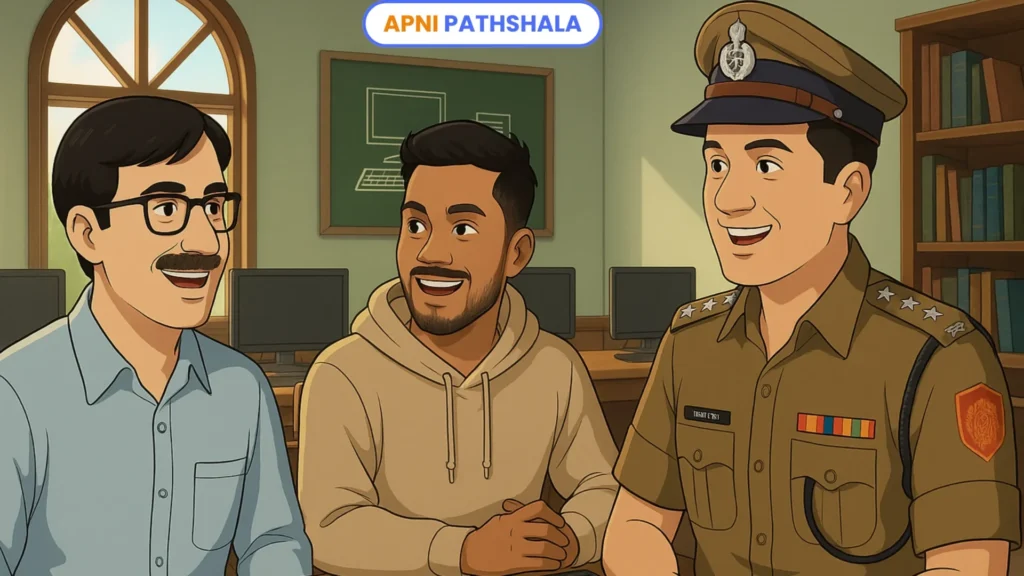
Now let’s talk about what happened after TechVeer started. Honestly, the results were amazing! When our team asked police officers and their families about the importance of digital literacy, almost everyone said the same thing: “This is one of the most important things we need to learn.”
Let’s look at some numbers:
TechVeer Naigaon
- 30 police officers are studying
- 10 parents learning digital skills
- 15 college students practicing
👉 Total: 45 learners - Already 34 constables have successfully completed their courses!
TechVeer Marol
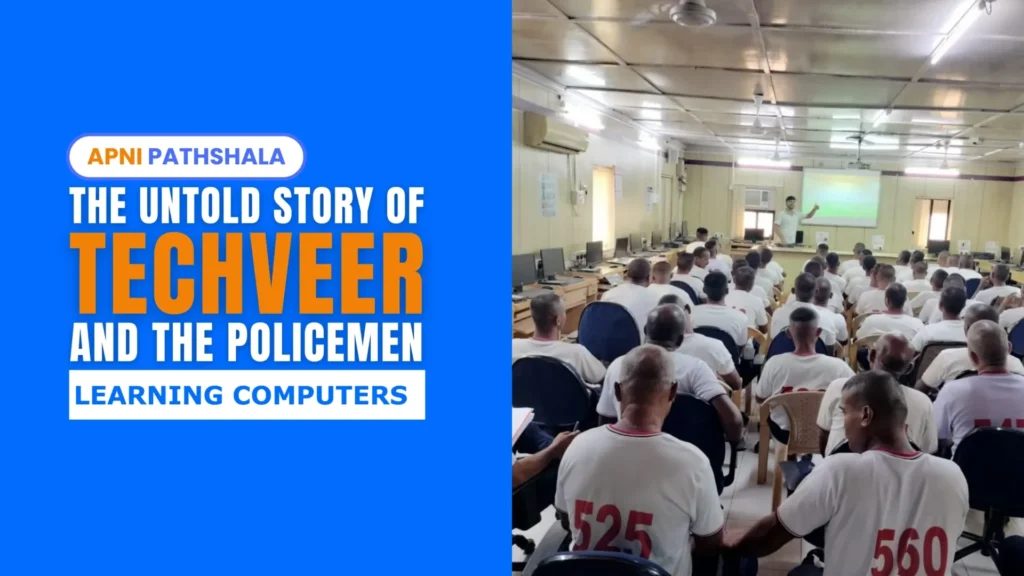
- More than 560 students have studied here
- In total, 660+ learners have joined 600 police officers and 60 staff members
One of the coolest things? Officers improved their typing speed a lot! From just 10 words per minute to 30+ words per minute in only 2 months. That’s super fast progress, right?
But of course, it wasn’t all easy. There were some big challenges, too.
Chapter 4 – Challenges in Indian Police Colonies
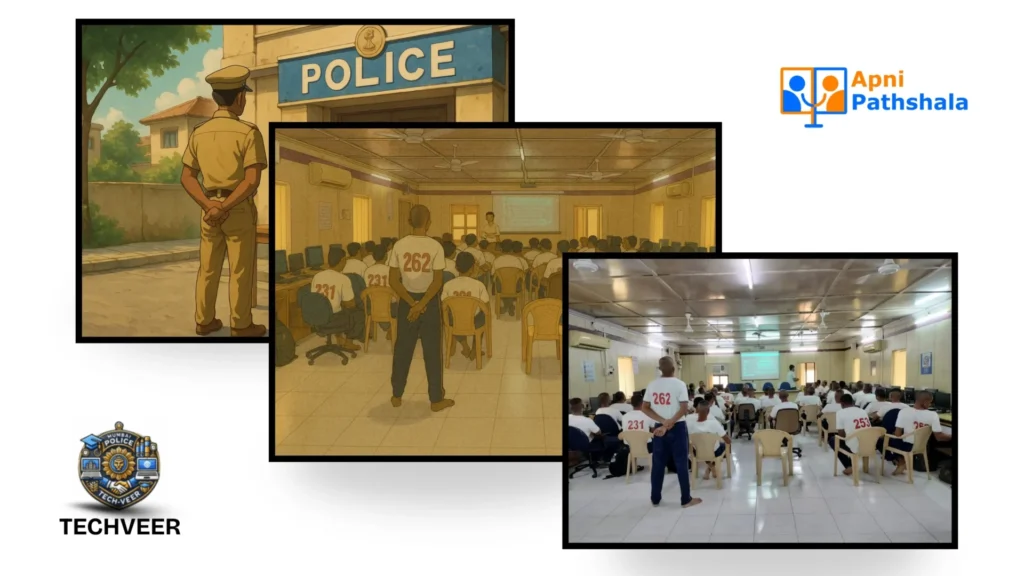
Imagine trying to teach 50 officers in just 2 hours with only 25 computers. It sounds impossible, right? But TechVeer found a smart solution! They split the officers into two batches: the first batch learned the theory for an hour, while the second batch practiced on the computers. Then they switched, so everyone got a chance to learn both the theory and the practical skills. Simple, but super effective!
Getting permissions was another challenge. You can’t just set up a learning center inside a police colony without informing the authorities. Even installing something like a CCTV camera needed proper approval. This sometimes slowed down the work, but luckily, all the officials supported the initiative.
And then there’s the toughest part, the officers’ odd duty hours. After a whole day of stressful police work, they were tired. But still, they came to TechVeer. They pushed themselves to learn, to improve, and to set an example for their families.
In the end, Techveer’s story shows that even challenges can lead to great success. It’s not just about the numbers; it’s about how our heroes keep learning and trying hard, even when times are tough. Their determination proves that you can overcome anything if you don’t give up!
Conclusion
TechVeer is not just about teaching computers. It’s about empowering protectors and their families to face the digital world with confidence.
When a police officer can type faster, prepare reports, and understand cybercrime better, the whole community benefits. When their children explore AI and freelancing, they bring pride and hope to their families.
This is the real success of TechVeer, protecting the protectors by giving them digital armor.
Comment your thoughts on this initiative, and don’t forget to share it with your friends!
👉 Explore more inspiring stories on our Apni Pathshala Blogs.
Would you like to read about the impact of a similar initiative of Apni Pathshala?
👉 Can Peer Learning Create a Class Without a Teacher?
👉 Students Who Became Mentors!


5 Responses
TechVeer is such a powerful initiative empowering police families with digital skills is a game-changer for community safety and growth
You said it perfectly, Pranav. Digital skills in police families truly strengthen both homes and communities.
अतिशय छान आधुनिक तंत्रज्ञानाविषयी खूप महत्त्वाची माहिती मिळत आहे
आपण या उपक्रमाद्वारे खूप महत्त्वाची जबाबदारी पार पाडत आहात धन्यवाद
धन्यवाद! आपल्या अशा पाठिंब्यामुळेच हा उपक्रम अधिक प्रभावीपणे राबवता येतो.
This story of TechVeer is very inspiring. We usually see police officers only during emergencies, but we never think about how much they need digital skills in today’s world. It is very nice to see an initiative that supports not just the officers but also their families. The progress in Naigaon and Marol shows how much difference one good idea can make. The officers learning typing, parents learning basic digital skills, and children exploring AI is a big change for the whole community. Even with odd duty hours and limited resources, they still showed the desire to learn. TechVeer truly feels like a step toward a safer and more confident digital India.